
Research Chemicals
Showing all 14 results
-
Amphetamine
Research Chemicals Price range: € 100,00 through € 980,00 Select options This product has multiple variants. The options may be chosen on the product page -
Buy 2-FDCK HCL
Research Chemicals Price range: € 28,00 through € 280,00 Select options This product has multiple variants. The options may be chosen on the product page -
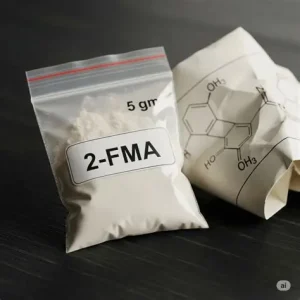
Buy 2-FMA (2-Fluoromethamphetamine)
Research Chemicals Price range: € 150,00 through € 600,00 Select options This product has multiple variants. The options may be chosen on the product page -
Buy 25i-NBOMe Powder
Research Chemicals Price range: € 240,00 through € 1.920,00 Select options This product has multiple variants. The options may be chosen on the product page -
Buy 2C-B-FLY 10 MG Pellets
Research Chemicals Price range: € 80,00 through € 2.000,00 Select options This product has multiple variants. The options may be chosen on the product page -
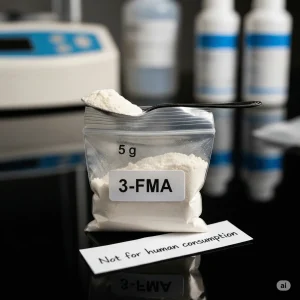
Buy 3-FMA Online
Research Chemicals Price range: € 150,00 through € 600,00 Select options This product has multiple variants. The options may be chosen on the product page -
Buy 4-AcO-DMT Online
Research Chemicals Price range: € 145,00 through € 2.200,00 Select options This product has multiple variants. The options may be chosen on the product page -
Buy 4-FA Online
Research Chemicals Price range: € 125,00 through € 500,00 Select options This product has multiple variants. The options may be chosen on the product page -
Buy 4-FMA Pure (4-Fluoromethamphetamine)
Research Chemicals Price range: € 150,00 through € 600,00 Select options This product has multiple variants. The options may be chosen on the product page -
Buy DMC (Dimethocaine)
Research Chemicals Price range: € 150,00 through € 900,00 Select options This product has multiple variants. The options may be chosen on the product page -
Buy MXE (Methoxetamine) Powder
Research Chemicals Price range: € 170,00 through € 4.500,00 Select options This product has multiple variants. The options may be chosen on the product page -
Buy Naphyrone (O-2482, Naphthylpyrovalerone)
Research Chemicals Price range: € 150,00 through € 900,00 Select options This product has multiple variants. The options may be chosen on the product page -
Buy Noopept Online
Research Chemicals Price range: € 140,00 through € 435,00 Select options This product has multiple variants. The options may be chosen on the product page -
Buy O-DSMT Online
Research Chemicals Price range: € 145,00 through € 580,00 Select options This product has multiple variants. The options may be chosen on the product page







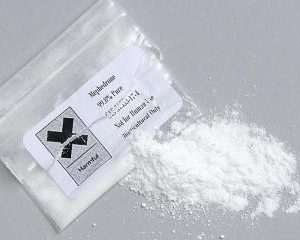

Research Chemicals: Information, Science & Public Health Overview
Understanding Research Chemicals in a Scientific Context
The term “Research Chemicals” is commonly used in scientific literature, regulatory discussions, and public health documentation to describe synthetic compounds that are often studied in laboratory settings but may not yet be fully characterized, widely approved, or consistently regulated for human use.
In modern public health drug information and forensic science, this category is closely associated with rapidly emerging substances that fall under broader classifications such as novel psychoactive substances (NPS) and synthetic compounds information frameworks. These substances are frequently discussed in the context of chemical innovation, analytical chemistry, and regulatory response systems.
This article provides an educational overview of Research Chemicals, focusing on scientific classification, forensic analysis, public health implications, and global regulatory approaches.
What Are Research Chemicals?
Scientific and Regulatory Definitions
In scientific terms, Research Chemicals refer to synthetic or semi-synthetic compounds that are often created for laboratory study in pharmacology, chemistry, or toxicology. However, in public health and regulatory contexts, the term is also used more broadly to describe substances that may:
- Have limited clinical research data
- Be newly synthesized or structurally modified
- Lack consistent regulatory approval
- Be identified through forensic monitoring systems
Within designer chemical compounds awareness, these substances are frequently discussed due to their rapid structural evolution and the challenges they pose to regulatory systems.
It is important to note that “research chemical” is not a formal scientific classification but rather a descriptive umbrella term used across multiple disciplines.
Novel Psychoactive Substances (NPS)
Understanding the Classification Framework
A key concept in modern synthetic compounds information is the classification of novel psychoactive substances (NPS). These are compounds designed to mimic the effects of controlled substances while differing chemically enough to evade existing legal frameworks.
NPS categories may include:
- Synthetic stimulants
- Synthetic cannabinoids
- Synthetic opioids
- Other structurally modified psychoactive compounds
Public health agencies use the NPS classification to monitor emerging substances and assess potential risks to communities. This classification is essential in chemical safety education and global drug monitoring programs.
Forensic Chemistry and Laboratory Research
How Research Chemicals Are Studied
In forensic chemistry research, scientists analyze unknown or newly emerging compounds using advanced analytical techniques. These methods are essential for identifying substances that may not yet be cataloged in standard chemical databases.
Common forensic tools include:
- Mass spectrometry (MS)
- Gas chromatography (GC)
- Liquid chromatography (LC)
- Nuclear magnetic resonance (NMR) spectroscopy
These techniques allow researchers to determine molecular structure, detect trace compounds, and compare unknown substances against reference libraries.
Forensic laboratories play a critical role in identifying unregulated chemical substances and supporting law enforcement, healthcare systems, and public health agencies.
Chemical Research and Pharmacology Perspectives
Understanding Compound Behavior in Scientific Studies
From a pharmacological standpoint, research chemicals are studied to understand how synthetic compounds interact with biological systems. This includes:
- Receptor binding activity
- Metabolic breakdown pathways
- Toxicological profiles
- Structure-activity relationships
In controlled laboratory environments, researchers evaluate how molecular modifications influence chemical behavior. This is a key component of forensic chemistry research and pharmaceutical development studies.
These investigations contribute to broader knowledge in medicinal chemistry and toxicology, although many compounds remain insufficiently studied for clinical application.
Public Health and Safety Considerations
The Role of Public Health Monitoring
In public health drug information, research chemicals are often discussed in relation to emerging substance trends and potential community health risks. Because these compounds may vary widely in composition and purity, they present challenges for health monitoring systems.
Public health considerations include:
- Limited toxicological data availability
- Variability in chemical composition
- Difficulty in standardizing risk profiles
- Challenges in clinical identification
These factors make chemical safety education an important part of harm reduction and public awareness initiatives.
Risks Associated with Unregulated Compounds
Educational Overview of Potential Concerns
In public health literature, unregulated chemical substances are often associated with uncertainty due to the lack of consistent testing and regulatory oversight.
Key concerns discussed in scientific and medical contexts include:
- Insufficient long-term safety data
- Unknown interaction profiles
- Variability between batches or formulations
- Limited clinical research validation
Because many research chemicals are not standardized, their effects cannot be reliably predicted across populations. This is why public health drug information emphasizes caution and awareness when discussing emerging compounds.
Legal and Regulatory Frameworks
Global Approaches to Regulation
The legal status of Research Chemicals varies significantly across countries and regions. Many jurisdictions use evolving regulatory frameworks to address the rapid emergence of new compounds.
Common regulatory approaches include:
- Blanket bans on structural analogs of controlled substances
- Temporary class-wide scheduling systems
- Inclusion under novel psychoactive substances (NPS) legislation
- Rapid emergency scheduling powers for new compounds
Regulatory agencies continuously update legal frameworks to address designer chemical compounds awareness, ensuring that new substances can be assessed and controlled more effectively.
Forensic Toxicology and Chemical Monitoring Systems
Tracking Emerging Substances
Forensic toxicology plays a central role in identifying and monitoring research chemicals. Toxicologists analyze biological and chemical samples to detect the presence of unknown or newly emerging compounds.
Key functions include:
- Identifying substances in clinical or forensic cases
- Supporting emergency medical responses
- Tracking emerging trends in synthetic compounds
- Providing data for regulatory decision-making
Chemical monitoring systems, often coordinated at national or international levels, help detect shifts in substance use patterns and emerging risks.
Harm Reduction and Public Health Education
Evidence-Based Awareness Strategies
Harm reduction strategies are an important component of chemical safety education and substance awareness education. These approaches focus on reducing potential risks through accurate information and public health outreach.
Key harm reduction principles include:
- Providing factual, science-based education
- Increasing awareness of unknown chemical risks
- Supporting access to medical and public health resources
- Encouraging informed decision-making
- Reducing stigma around substance-related health issues
Public health organizations emphasize that education and awareness are essential tools in managing risks associated with emerging synthetic compounds.
Frequently Asked Questions (FAQ)
What are Research Chemicals?
Research Chemicals are synthetic or semi-synthetic compounds studied in laboratory or forensic settings that may not be fully regulated or clinically approved.
Are Research Chemicals the same as NPS?
Not exactly. Research chemicals is a broader informal term, while novel psychoactive substances (NPS) is a regulatory classification used in public health and legal systems.
Why are Research Chemicals studied?
They are studied in forensic chemistry research, pharmacology, and toxicology to understand their structure, behavior, and potential risks.
Are Research Chemicals legal?
Legal status varies widely. Many are controlled under national drug laws or included in analog or NPS legislation depending on the jurisdiction.
What role does forensic science play?
Forensic science identifies and analyzes unknown compounds, helping support public health monitoring and regulatory enforcement systems.
Conclusion: Advancing Knowledge Through Science and Education
The study of Research Chemicals sits at the intersection of chemistry, forensic science, pharmacology, and public health. Through continued research, monitoring, and chemical safety education, scientists and regulatory agencies work to better understand emerging synthetic compounds and their impact on society.
For further learning, individuals are encouraged to consult official public health organizations, forensic science publications, or licensed professionals specializing in public health drug information and substance-related research.
Disclaimer: This content is provided strictly for educational and informational purposes only. ‘Research chemicals’ and related compounds may be controlled, restricted, or illegal in many jurisdictions. This page does not promote, encourage, or facilitate the production, sale, purchase, or use of any controlled or unregulated substances. Always comply with applicable laws and consult qualified scientific or public health professionals for guidance regarding chemical safety and substance-related concerns.